Being Here Is Enough: How Asian Americans Are Learning to Exist Without Earning It
I used to keep a running tab in my head at every family gathering. Grades mentioned: check. Promotions discussed: check. Side projects casually dropped into conversation: double check. It wasn't bragging, exactly. It was more like proof of life — evidence that I was still moving, still climbing, still worth the space I was taking up at the dinner table.
I don't think I'm alone in this.
For a lot of Asian Americans, the pressure to perform isn't something that lives only at the office or in the classroom. It follows you into the living room, into the group chat, into the quiet Sunday mornings when you should be resting but instead find yourself guilt-scrolling LinkedIn. The message, absorbed over years and generations, is consistent: your presence is only as valuable as what you can show for it.
But something is shifting. Slowly, imperfectly, and sometimes awkwardly — people are starting to push back.
The Inheritance Nobody Asked For
To understand why simply being feels so loaded, it helps to trace where the pressure comes from. For many Asian immigrant families, productivity wasn't a personality trait — it was a survival strategy. Parents and grandparents who came to this country with nothing leaned hard into work ethic because there was no safety net, no room for error, and often no welcome mat either. Achievement was the one currency that translated across cultural and language barriers.
That inheritance got passed down, sometimes explicitly through expectations and comparisons, and sometimes just through the ambient stress of watching your parents never stop moving. You internalized it before you had the vocabulary to question it.
The problem is that survival strategies don't always age well. What kept one generation afloat can quietly drown the next. And a growing number of Asian Americans — particularly millennials and Gen Z — are starting to name that tension out loud.
Hustle Culture Has a Specific Flavor Here
American hustle culture is already exhausting for everyone. But for Asian Americans, it comes with an extra layer. There's the model minority myth, which positions the community as naturally hardworking and high-achieving — a stereotype that sounds like a compliment until you realize it's a cage. It erases struggle, discourages vulnerability, and makes rest feel like a personal failure rather than a basic human need.
Then there's the visibility problem. Asian Americans are often praised for being quietly competent but overlooked for leadership, recognition, or genuine connection. So some of us overcorrect — performing productivity even harder, making sure our output is undeniable, hoping that if we achieve enough, we'll finally be seen.
The exhausting irony is that all that performing can make you less present, not more. You're in the room but not really there. You're at the dinner but mentally drafting tomorrow's to-do list. You're technically available but emotionally somewhere else entirely.
What Presence Actually Looks Like
The shift toward presence over performance doesn't announce itself with a vision board or a LinkedIn post. It tends to show up in smaller, quieter ways.
It looks like a friend who stops canceling plans because she finally decided that seeing people she loves counts as something worth protecting in her schedule — not a reward for finishing everything else first.
It looks like a guy who used to spend every family call deflecting questions with updates on his career, who started just... asking his mom about her week instead. And actually listening.
It looks like someone logging off at 6 p.m. not because they finished everything, but because they decided that being present for their own evening matters.
None of this is passive. Choosing presence is, in a lot of ways, more demanding than defaulting to productivity. Productivity gives you something to point to. Presence asks you to sit with yourself and with other people without the armor of accomplishment.
The Mental Health Connection
Therapists who work with Asian American clients often describe a particular pattern: high functioning on the outside, quietly unraveling on the inside. The cultural stigma around mental health in many Asian communities is well documented — vulnerability gets read as weakness, and asking for help can feel like admitting failure.
But there's a thread connecting that stigma to the performance pressure. If your worth is tied to output, then struggling becomes something to hide. And hiding takes energy. Energy that could go toward actual connection, actual rest, actual healing.
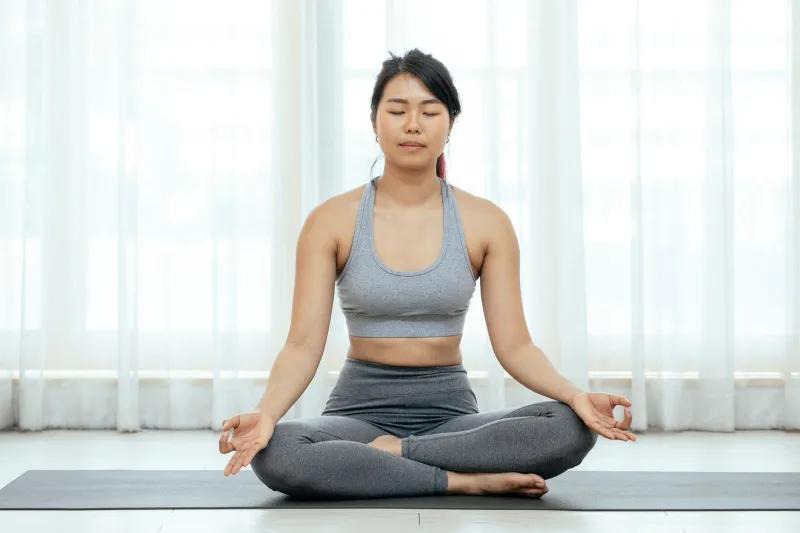
The movement toward presence is, in part, a mental health movement — even when it doesn't call itself that. Meditation, therapy, setting work boundaries, saying no to obligations that drain you: these aren't indulgences. They're acts of maintenance for a self that's been running on empty for a long time.
Redefining What It Means to Show Up
Here's the reframe that's been quietly gaining ground in Asian American spaces, in group chats and therapy sessions and late-night conversations: showing up doesn't have to mean showing off.
You can show up for a friend by sitting with them when they're struggling, not by offering a solution. You can show up for your family by being genuinely curious about their lives, not by reporting on yours. You can show up for yourself by actually taking the walk, eating the meal slowly, watching the show you love without multitasking.
This isn't about abandoning ambition. It's about decoupling your presence from your productivity. About understanding that you are not a human résumé, and the people who matter most to you — the ones worth being present for — already know that.
The Long, Ongoing Work
I won't pretend this is easy to unlearn. Some days I still catch myself calculating my worth in completed tasks. The instinct runs deep. But I'm learning to notice it now, which is at least a start.
What I'm slowly coming around to is this: the most meaningful moments I can point to in my life weren't the achievements. They were the ordinary Tuesday evenings, the long phone calls that went nowhere in particular, the meals that lasted longer than they needed to. The times when I wasn't performing anything at all — just there, just present, just enough.
Turns out, that's not a small thing. That might actually be the whole thing.