Lunchbox Shame Was Real — But So Was the Love Packed Inside It
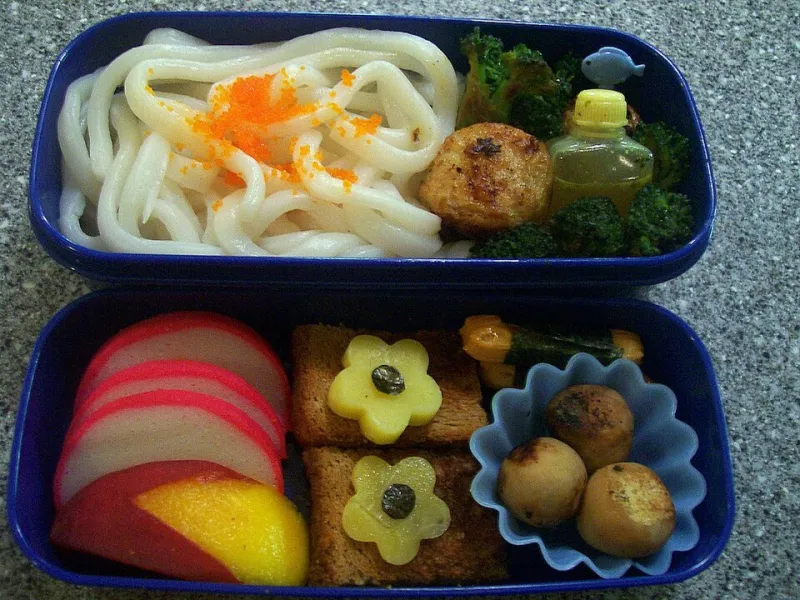
Photo: Maria from McLean, Virginia, USA, CC BY 2.0, via Wikimedia Commons
There's a moment I think about more than I should. Sixth grade, cafeteria, the plastic tray with its little compartments. I had leftover curry rice — my mom's, made the night before, the potatoes gone soft and golden in a way that only happens when something simmers for hours. The girl next to me wrinkled her nose and asked what the smell was.
I remember saying, "It's nothing. It's gross."
My mother's curry. Gross. I said that out loud, in a public building, about food she had woken up early to make.
The Great Lunchbox Trade
If you grew up Asian American in the '90s or 2000s, you know the ritual. The homemade dumplings traded for a Lunchables. The fried rice swapped for a cold Lunchables pizza — wait, that's the same brand, but you get me. The thermos of pho that you prayed nobody would ask about, sipped as quickly and invisibly as possible, like contraband.
We weren't just embarrassed by the food. We were embarrassed by what the food proved — that our houses smelled different, that our mothers shopped at stores with characters on the signage, that we were, in some way our classmates could detect from three lockers down, not from around here.
So we performed assimilation one lunch period at a time. And our parents, who understood more English than they let on, never said a word about the untouched containers coming home. My mom would just make more. She never once asked why I came home hungry on the days I'd traded everything away.
I think about that now and I need to sit down.
What the Food Was Actually Saying
Here's the thing about families like mine: we didn't do verbal affection. Nobody in my house said "I love you" with any regularity — it would have been like speaking a foreign language we only knew from textbooks.
But my mother would spend her Sunday peeling shrimp with her bare hands because I hated the vein. She'd drive forty minutes to the good Asian grocery for proper rice noodles. She'd fry whole fish and pick out every bone before serving it to me, silently, like it was nothing, like it wasn't the most labor-intensive act of devotion imaginable.
In a lot of Asian households, food isn't just food. It's the grammar of care. "Have you eaten?" means "I love you." "Eat more, you look thin" means "I worry about you constantly." A peeled shrimp means everything a greeting card would say, minus the card.
And the cruel joke of childhood is that we took the one language of love our families spoke fluently and treated it like a social liability.
The Adult Reckoning
Somewhere in my twenties, the flip happened. Maybe it was the first time I moved away and couldn't get the dish. Maybe it was watching a white coworker pay $18 for congee at a trendy spot in Brooklyn and call it "so underrated." Maybe it was just growing up enough to feel the absence.
Now the dishes I hid are the ones I crave with an almost embarrassing intensity. I've cried in parking lots after calling my mom to ask how she makes the curry — not because the recipe is complicated, but because hearing her explain it, imprecise as ever ("just some of the powder, until it looks right"), made me realize how much of her I've been trying to reconstruct from memory.
There's a wordless homecoming in cooking these meals. Every time I make my grandmother's braised pork belly, I'm doing something my twelve-year-old self would find mortifying and my thirty-something self finds necessary: I'm saying yes to the smell, the mess, the whole inheritance of it.
Your Turn — What Was in Your Lunchbox?
I want to know what you traded away. The dish you pretended to be embarrassed by. The soup you drank in hiding. The thing you'd give anything to taste again exactly the way your grandmother made it.
Drop it in the comments. Better yet — call whoever made it and ask them to walk you through the recipe. Ask them to be vague. Ask them to say "until it looks right."
That's where the love lives, by the way. Not in the measurements. In the refusal to measure, because love, in this language, was never about precision. It was about showing up every single day with something warm in a container, and never once asking for credit.